2025 Alishan Qing Xin GABA Oolong – 50g
$29.50
6 in stock
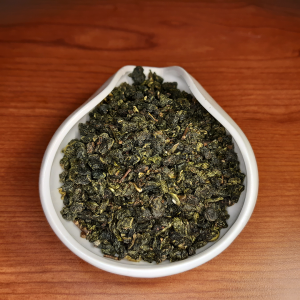
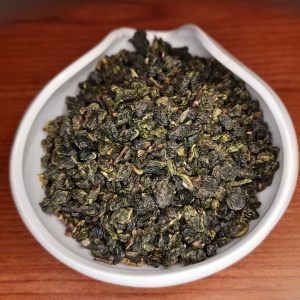
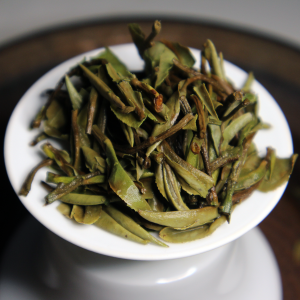
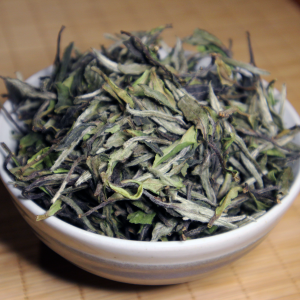
This is a Taiwanese GABA oolong from Alishan a famous high mountain region in Chiayi County, Taiwan. It is of the qing xin (green heart) and grown at an elvation of approximately 1200m. This tea is defined as a GABA oolong because it contains 175mg of GABA per 100g. GABA is an amino acid and neutrotransmitter naturally present in the human brain and in trace amounts in the tea plant. By placing the tea in a pressurized tank to form an anaerobic enviroment in which the tea leaves perform a different enzymatic reaction to oxidation which causes the abundant quantities of glutamic acid present in tea leaves to convert into GABA. In regular tea processing this glutamic acid would break down, leach out and convert into volatile aromatic compounds (giving oxidised teas their more complex aromas). It is currently not clear whether the GABA in tea (and other supplements) has any actual effect on the brain, please do your own research on this subject, I recommend the Gaba Tea and GABA wikipedia articles as good starting points. This tea is about 60% oxidized and has a medium roast.
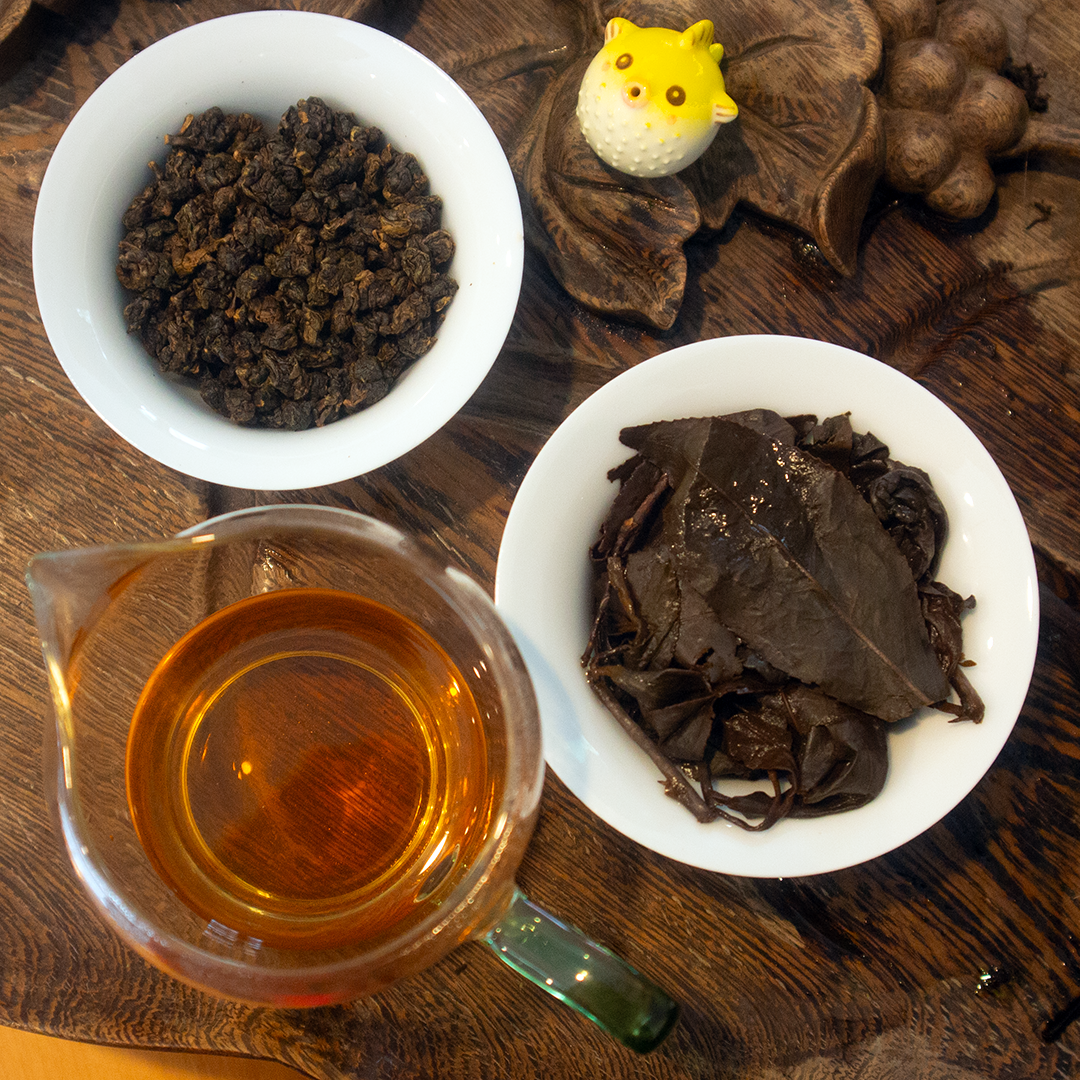
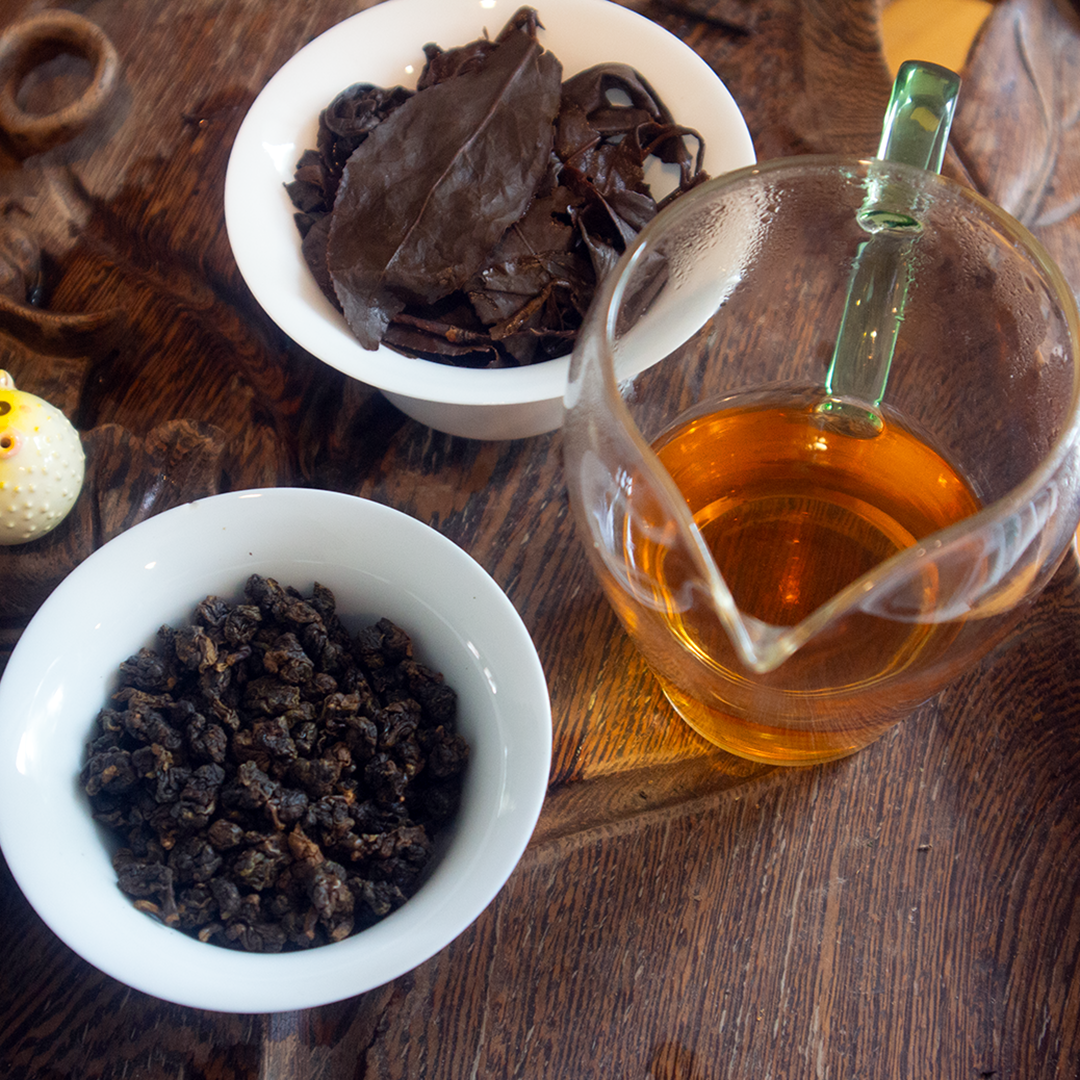
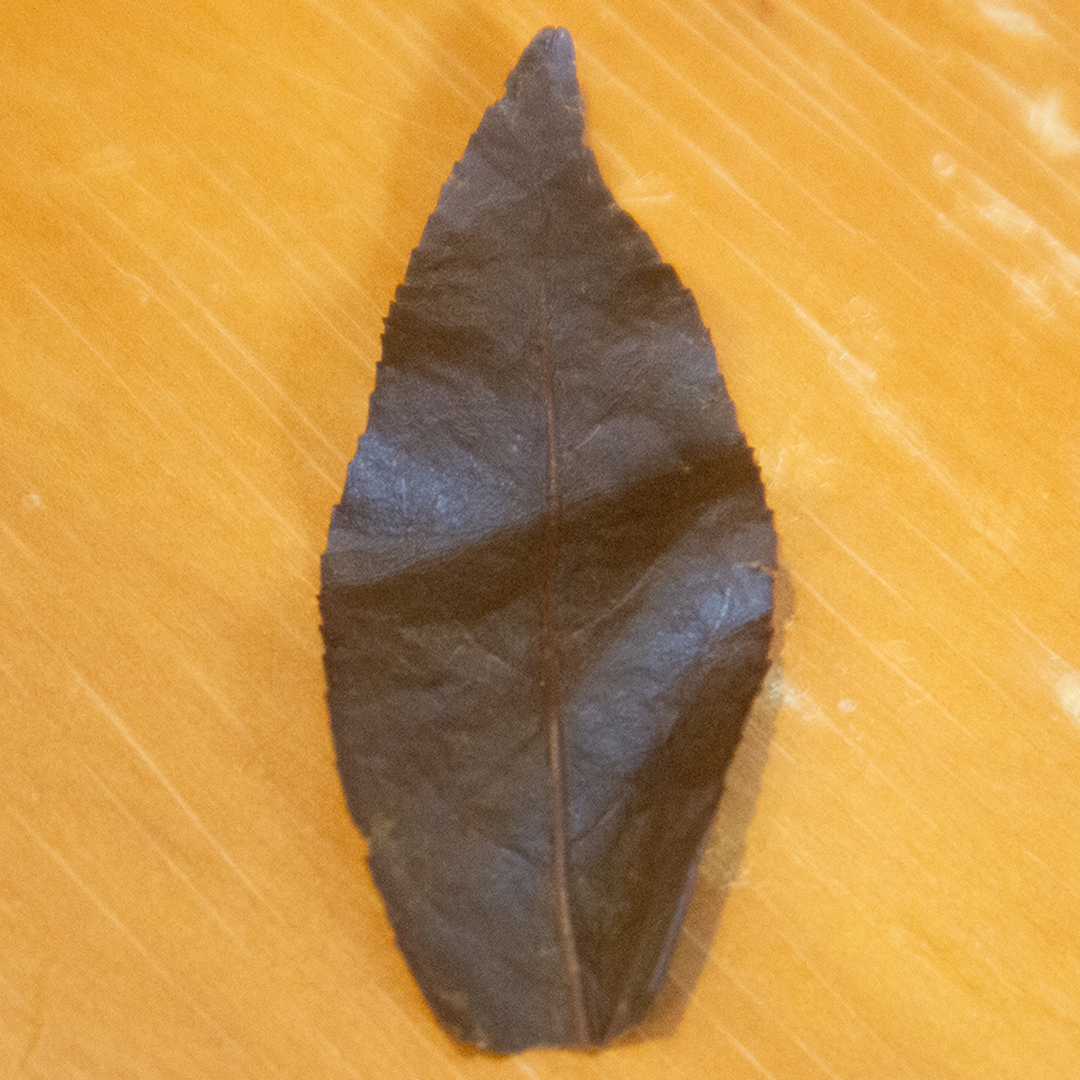
Immediately upon opening the vaccuum packed bag you’re assailed with a strong and satisfying aroma of a fruit tart or pie, I smelled apples and blackberries while my friend smelt jackfruit. The buttery sugary fruity pie crust smell is maintained throughout the brews, diminished in the first two, replaced with more of a typical roasted oolong aroma before resurfacing after the roasted notes have worn off in longer milder later infusions. The liquor is a golden orange, there are some tiny hairs present in early brews, the mouth feel is fairly thick and smooth, the higher level of oxidation is clear in the fruity aroma and slight bitterness in stronger infusions. The empty cup smell is on the milder side, though it remains on the gaiwan lid, thoroughly enjoyable throughout, best enjoyed on a full stomach with a clean palate, the head feeling was quite mild and relaxed.
So processing for this GABA tea goes as follows:
1. Picking (oxidation starts here)
2. Withering first outdoors and then indoors
3. Tea is left in a pressurized vacuum chamber (yan yang ji 厭氧機)(anaerobic enzymatic reaction occurs)
4. Tea is tossed in a large bamboo cylindrical machine (Da Lang 大浪) this is where most of the oxidation occurs.
5. Tea is fixed via shāqīng (杀青) to halt oxidation in large heated spinning metal cylinders replication the process of a traditional wok shāqīng.
6. The tea is rolled to help even out water content and prepare for shaping in a Róuniǎn jī (揉捻机) a machine that moves the tea around in circles over ridges. on a flat plate.
7. The tea is compressed in a tightened cloth sack in a Bù bāo róuniǎn jī (布包揉捻机) and then rolled round and round resulting in the ball shape in a Qiúxíng róuniǎn jī (球形揉捻机) then declumped in another machine.
8. Finally the tea is dried in a various heated drying machines resembling large tumble dryers and dehydrators.
9. Finally after some time it is machine-roasted to a medium level.
| Category: | Oolong (Taiwanese, Roasted, GABA) |
| Location of origin: | Alishan, Chiayi County, Taiwan |
| Cultivar/Varietal: | Qing Xin Oolong (青心烏龍) |
| Harvest Season: | Spring 2025 |
| Recommended Brewing Style: | Gongfucha style |
| Brewing Guidelines: | 6g/100ml 100°C, 40 seconds, 20 seconds, 45 seconds |
Additional information
| Weight | 50 g |
|---|
Related products
- -30%Select options This product has multiple variants. The options may be chosen on the product page

- All Tea 茶, Oolong Tea 烏龍茶, Taiwanese Tea
2021 Baguashan Dong Pian
- Price range: $20.30 through $36.54
-
-

- -30%
- Select options This product has multiple variants. The options may be chosen on the product page

- All Tea 茶, Chinese Tea, White Tea 白茶
2022/2025 Bai Mudan (White Peony)
- Price range: $16.25 through $32.50
-
-

-

- Select options This product has multiple variants. The options may be chosen on the product page

- All Tea 茶, Chinese Tea, Hei Cha 黑茶 & Sheng Pu’er 生茶
2015 He Xiang (Lotus Leaf) Jin Hua Fu Zhuan Cha
- Price range: $13.00 through $51.80
-
-

-

- Select options This product has multiple variants. The options may be chosen on the product page

- All Tea 茶, Chinese Tea, Oolong Tea 烏龍茶
2022 Huang Meigui (Yellow Rose) Wuyi
- Price range: $15.00 through $30.00
-
-